Scientists Taught Goldfish to Drive. AI Knew What It Wanted.
A fish drove across a room, rats learned to steer, pigs played video games, and bees rolled toys around for fun.
A fish drove across a room, rats learned to steer, pigs played video games, and bees rolled toys around for fun.
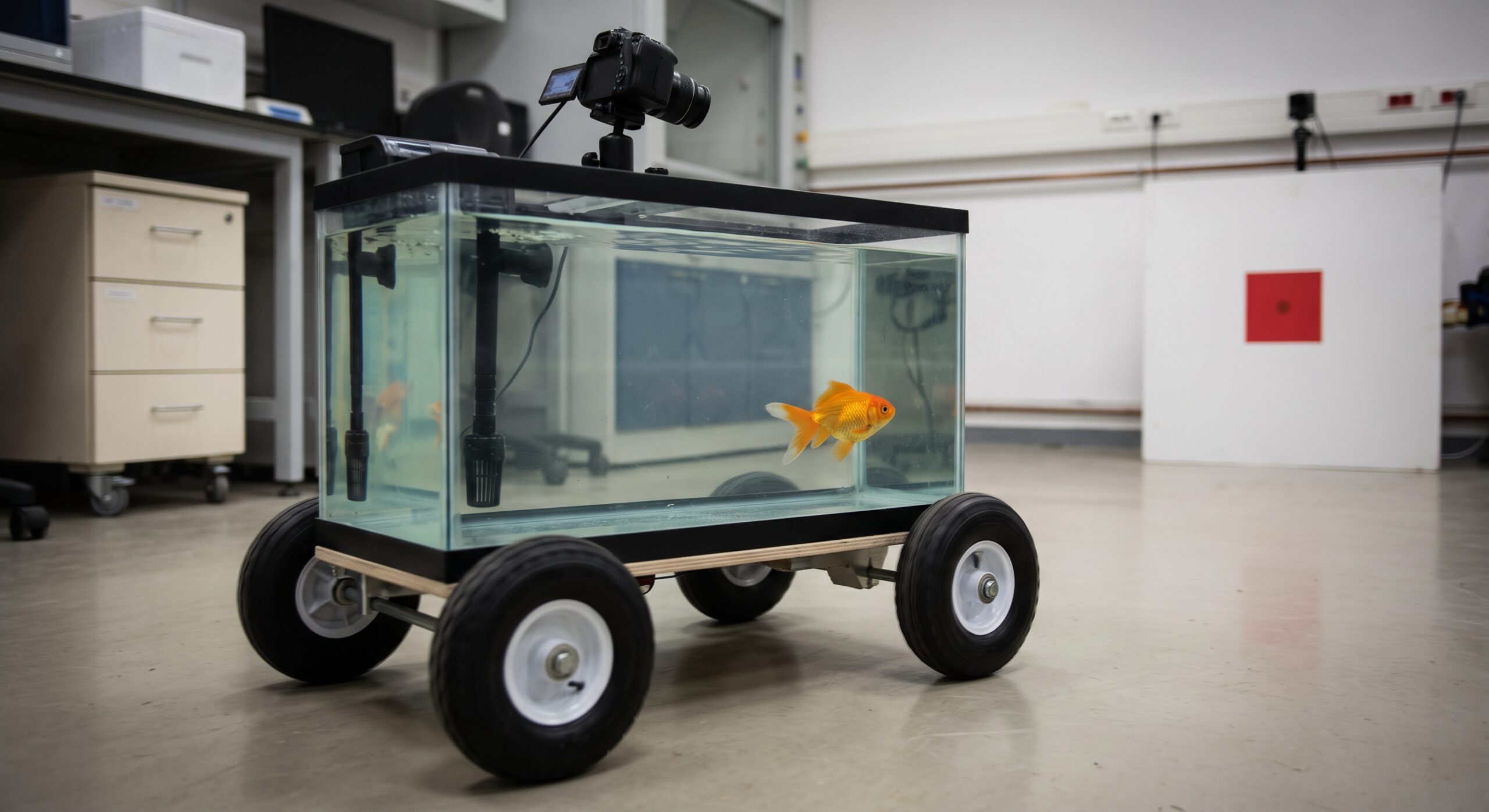
Picture a fish tank rolling across a laboratory floor with a goldfish inside. Nobody is pushing it, and nobody is steering it with a remote control. The fish swims toward one side of the aquarium, a camera sees where it is going, and the wheels underneath move in the same direction.
The fish is driving.
In 2022, researchers at Ben-Gurion University built what they called a Fish Operated Vehicle. It was basically an aquarium mounted on wheels, with a camera above it tracking the fish’s movement and turning that movement into steering.
Then researchers put a coloured target across the room. If the fish drove over to it, it got food. After some practice, the goldfish figured out how to reach it.
The Fish Knew Where It Wanted to Go
This was not just a fish swimming randomly while a robot wandered around underneath it. Researchers changed where the vehicle started, added fake targets and made the fish approach from different directions. The goldfish still learned how to reach the right place.
That was the interesting part. Fish already know how to navigate underwater, but this fish was looking through glass at a completely different world and controlling a machine moving across dry land.
The camera and software became a bridge between the fish and the vehicle. The fish did not need to understand motors, wheels or computer vision. It only had to learn that swimming in a certain direction made the outside world move in that direction too.
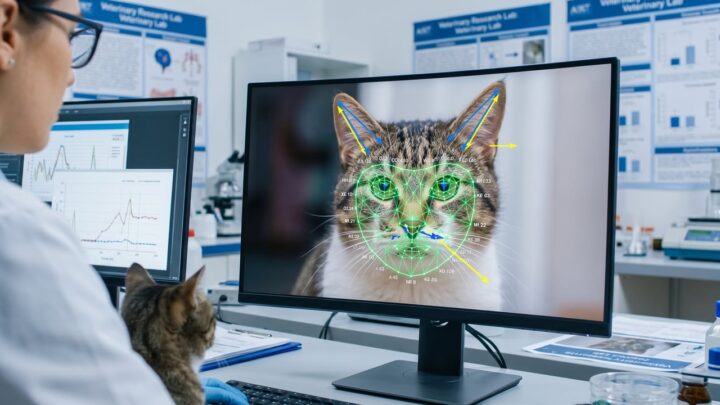
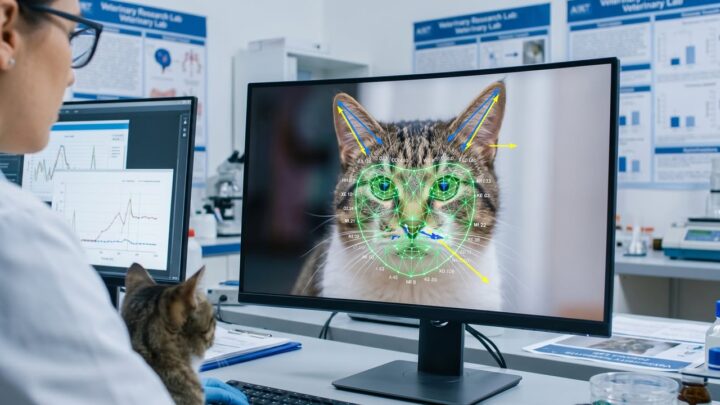
That idea matters far beyond one ridiculous-looking fish tank. AI and computer vision can watch an animal’s natural movements, recognize useful patterns and turn those movements into commands a machine can understand.
Instead of forcing the animal to learn our controls, the machine can begin adapting to the animal.
Rats Learned to Drive Too
Researchers at the University of Richmond built tiny cars for rats. The rats climbed inside and learned that touching different controls made the vehicle move.
With practice, they could steer toward a reward. Rats raised in more interesting environments, with more objects and chances to explore, learned the task better than rats raised in ordinary cages.
That suggested something bigger than simple memorization. Their environment seemed to affect how well they adapted to a strange new machine.
Some rats also continued showing interest in the cars after the normal rewards were removed. We cannot know whether a rat enjoys driving anything like a person does, but the experiment showed how quickly an animal can learn a completely artificial connection between its own actions and a machine.
Give the animal the right interface, and abilities that were invisible before can suddenly appear.
Four Pigs Played a Video Game
Their names were Hamlet, Omelette, Ebony and Ivory.
Researchers put the pigs in front of a computer screen with a joystick. Because pigs do not have hands, they moved the joystick with their snouts.
Moving the stick moved a cursor on the screen, and their job was to guide that cursor into a target. All four pigs learned the basic connection.
That sounds simple until you think about what the pig has to understand. It moves a physical object beside its face, and something completely separate moves on a glowing screen.
The pigs were not brilliant gamers, and a joystick designed for human hands was hardly the perfect controller for a snout. But they understood enough to use it.
Once again, technology created a bridge between two very different worlds. Modern AI could make that bridge even better. Instead of forcing a pig to use a human joystick, a camera could learn the pig’s natural movements. Instead of teaching the animal complicated controls, the software could adapt the controls to the animal.
The machine becomes the translator.
Then the Bumblebees Found the Toys
The strangest experiment may have involved animals with brains smaller than a sesame seed.
Researchers at Queen Mary University of London gave bumblebees small wooden balls. The bees did not need them for food, for their nests or for any obvious survival task.
They rolled them anyway.
Across the experiment, the bees rolled the balls hundreds of times. Some returned again and again, and younger bees rolled them more often than older bees.
Researchers then tested whether the bees actually seemed to value the experience. Later, the bees preferred areas that had previously been associated with access to the balls, even when the balls were gone.
The researchers concluded that the behaviour matched scientific signs of play.
That is remarkable because play is usually associated with animals we think of as much more intelligent. Dogs play, monkeys play and children play. Bees may play too.
Maybe Animals Were Smarter Than Our Tests
There is an easy mistake to make with stories like these. A goldfish driving a robot does not understand cars the way you do. A pig playing a video game does not understand computers. A bee rolling a ball is not secretly planning a soccer career.
That is not the point.
The interesting part is how flexible their brains are.
For years, humans often tested animal intelligence by giving animals human-style problems. If the animal failed, we sometimes treated that as proof the animal was not very smart.
But maybe the test was bad.
A pig does not have hands. A goldfish cannot walk across a room. A bee cannot explain what it is thinking.
AI and computer vision give researchers another option. Instead of forcing an animal to communicate in a human way, machines can watch how the animal naturally moves and build a bridge between that behaviour and our technology.
That could change how we study animal intelligence.
AI Could Become the Translator
The goldfish experiment used computer vision to turn swimming into steering. That basic idea can go much further.
Modern AI can already recognize complicated patterns in video, sound and movement. It can track tiny changes that humans miss and learn from amounts of data no researcher could process alone.
Applied to animals, that opens up very different questions. What does a fish do when it is confused? How does a pig show that it understands a task? Can a machine tell the difference between a bee working and a bee playing?
Could an AI eventually understand an animal’s body language well enough to let it control a machine without ever learning human controls?
We are already seeing similar ideas in research on whale calls, elephant communication and other animal behaviour.
The future may not be humans teaching animals how to use computers. It may be computers learning how animals already communicate.
The Fish Was Never Supposed to Drive
That is what makes the goldfish such a perfect image. A little fish swims toward a coloured target while a camera watches. Software translates the movement, motors turn, and the aquarium rolls across the floor.
Millions of years of evolution prepared that fish to move through water. Nothing prepared it to steer a vehicle across a laboratory.
But the fish did not need to understand the machine. The machine met the fish halfway.
The rats learned to steer. The pigs learned to move a cursor. Bumblebees found something that looked suspiciously like play.
None of those animals suddenly became smarter because humans gave them technology. Technology simply gave them new ways to show us what was already there.
And as AI gets better at reading movement, sound and behaviour, we may discover that one of the biggest limits in studying animal intelligence was never the animals.
We just weren’t building small enough cars apparently.