AI Is Learning to Hear What Farm Animals Feel
For thousands of years, we heard grunts, squeals and clucks. AI is starting to hear something else.
For thousands of years, we heard grunts, squeals and clucks. AI is starting to hear something else.
The Barn Was Never Quiet
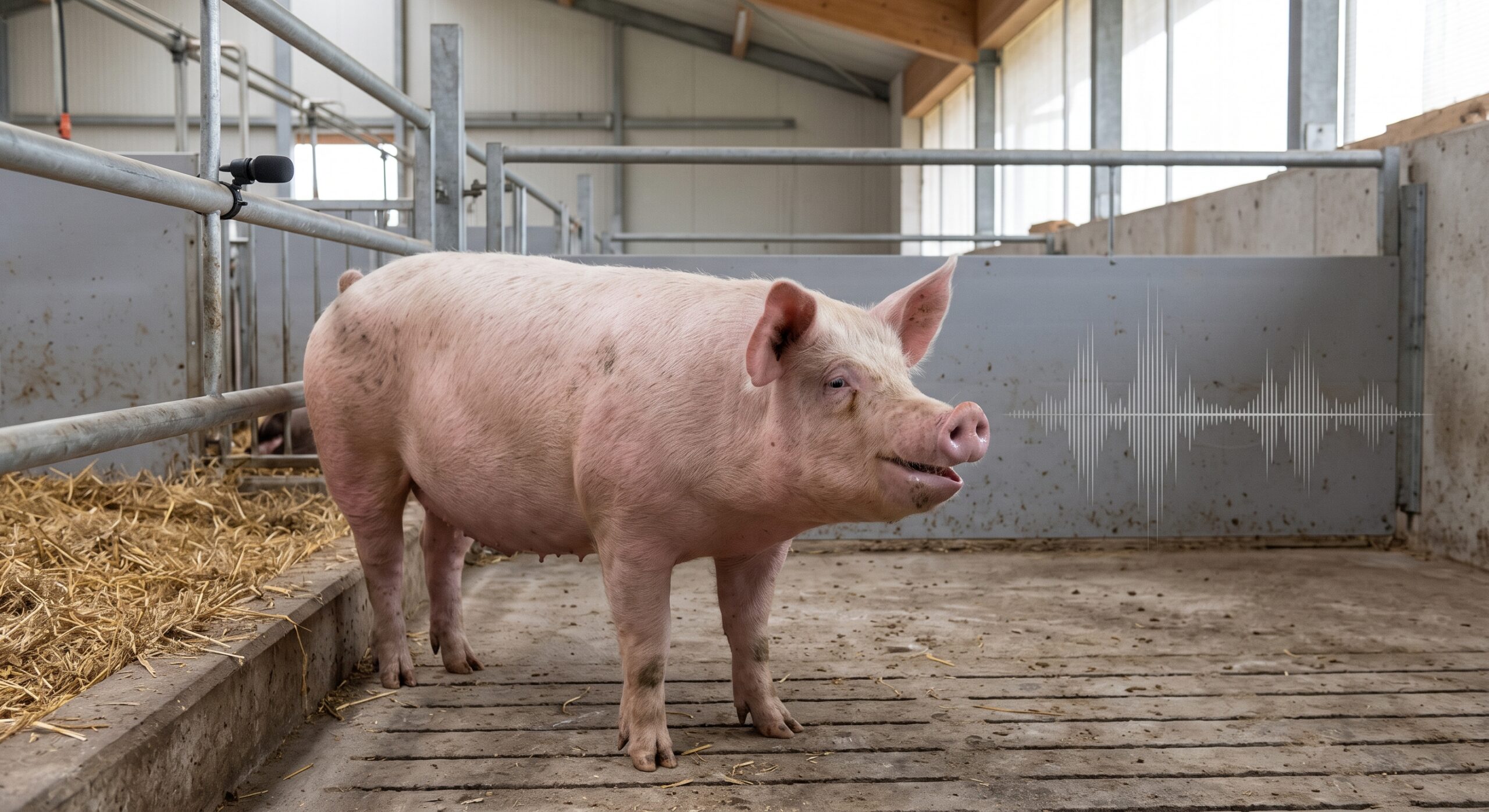
Walk through a pig barn and you hear noise everywhere: grunts, squeals, snorts and screams. To most people, one pig noise sounds a lot like another. Farmers can pick up more than most of us, but nobody can stand beside hundreds of animals all day listening for tiny changes.
In 2022, researchers collected more than 7,000 calls from 411 pigs. They recorded the animals in all kinds of situations, from feeding and resting to isolation, fighting and slaughter. Then they trained AI to tell the difference between sounds made during positive and negative situations. The system got it right about 91.5 percent of the time, which suggested all that barn noise contained much more information than it seemed to.
Happy Pigs Sound Different
The AI wasn’t translating pig noises into sentences or hearing something as specific as “I’m hungry” or “leave me alone.” It was doing something simpler: learning how pigs tend to sound when things are going well and how they sound when something is wrong.
Positive situations tended to produce shorter, lower sounds, while stressful situations were more likely to produce longer, higher-pitched squeals and screams. A human might miss those small differences, but the machine could compare thousands of examples and find patterns hidden inside the noise.
That leads to an obvious possibility. If a computer can learn what normal sounds like, a farm might eventually be able to hear trouble before a person can see it.
A Microphone That Never Stops Listening
A farmer can’t watch every animal every minute of the day, but microphones can listen constantly. Imagine a system hanging above the pens, quietly learning what normal sounds like. Most of the time, nothing happens. Then one part of the barn starts sounding different. The calls get longer, the pitch changes and stress sounds start showing up more often.
The system could then alert someone that something may be wrong. That might help farmers notice stress, illness or poor conditions earlier, before the problem becomes obvious. Researchers also quickly discovered that pigs weren’t the only animals giving away clues through sound.
Then AI Started Listening to Chickens
Chicken barns are even noisier. Hundreds or thousands of birds can turn individual clucks into one giant wall of sound, but AI can still pull patterns out of it.
In a later study, researchers recorded chickens during stressful situations, including sudden noises and unexpected objects. The birds sounded different, and AI learned to recognize those changes with roughly 94 percent accuracy in the tests. The chickens didn’t have to wear a device or push a button. They simply made the sounds they normally make while the AI listened.
That raised a bigger question: were researchers finding separate emotional signals for every species, or was there something more general hiding underneath?
Maybe Animals Share Some of the Same Clues
Researchers eventually compared sounds from several different animals, including cows, goats, horses, pigs and sheep. Their voices were obviously different, but some of the clues were surprisingly similar. Pitch mattered. Length mattered. Changes in loudness mattered.
Using those patterns, AI could often tell whether an animal was in a positive or negative situation. That suggests emotion may leave similar fingerprints in very different voices.
Humans already understand this idea. You don’t need to speak someone’s language to hear fear in their voice, and you don’t need a translation to recognize crying or anger. The words may be different, but the emotion still leaks through. Animals may be doing something similar.
The Animals May Have Been Telling Us All Along
For most of history, humans judged animal welfare mostly by looking. Is the animal eating? Is it moving normally? Does it look injured or sick? Those things still matter, but sound could give us an earlier warning because an animal might start sounding stressed before it looks obviously stressed.
That changes what a barn microphone can be. Instead of being just a recording device, it could become a kind of early-warning system. There is another side to this as well: if we become good enough at measuring animal stress, it becomes harder to say we didn’t know it was happening. The same technology that could improve farming could also make poor conditions much easier to spot.
Then the Cows Started Reading Us
The story gets stranger because while humans are building AI to understand animals, some animals are already very good at understanding us.
Researchers have shown cows videos of humans displaying different emotions through their faces and voices. The cows reacted differently to angry people than to happy ones, paid attention to those signals and changed their behavior afterward.
So while we’re building machines to decode cows, cows have apparently been studying humans for quite a while without needing AI to do it.
The Barn Starts Talking Back
Nobody has built a perfect animal translator, and AI can’t hear a pig grunt and tell you exactly what the pig is thinking. The important part is that useful information was sitting inside those sounds the whole time. We just weren’t very good at hearing it.
Now microphones can listen all day, and AI can compare thousands of calls. Small changes that once disappeared into the noise can suddenly stand out. A squeal can become a warning, a grunt can become a clue, and a barn full of noise can become information.
For thousands of years, humans wondered what animals were feeling.
Maybe they were already telling us. When we can talk to animals in the future that cow conversation is sure going to be awkward!!