AI Found Names in Elephant Calls — Then It Found an Alphabet in Whales
For most of human history, animals may have been talking around us while we heard only noise.
For most of human history, animals may have been talking around us while we heard only noise.
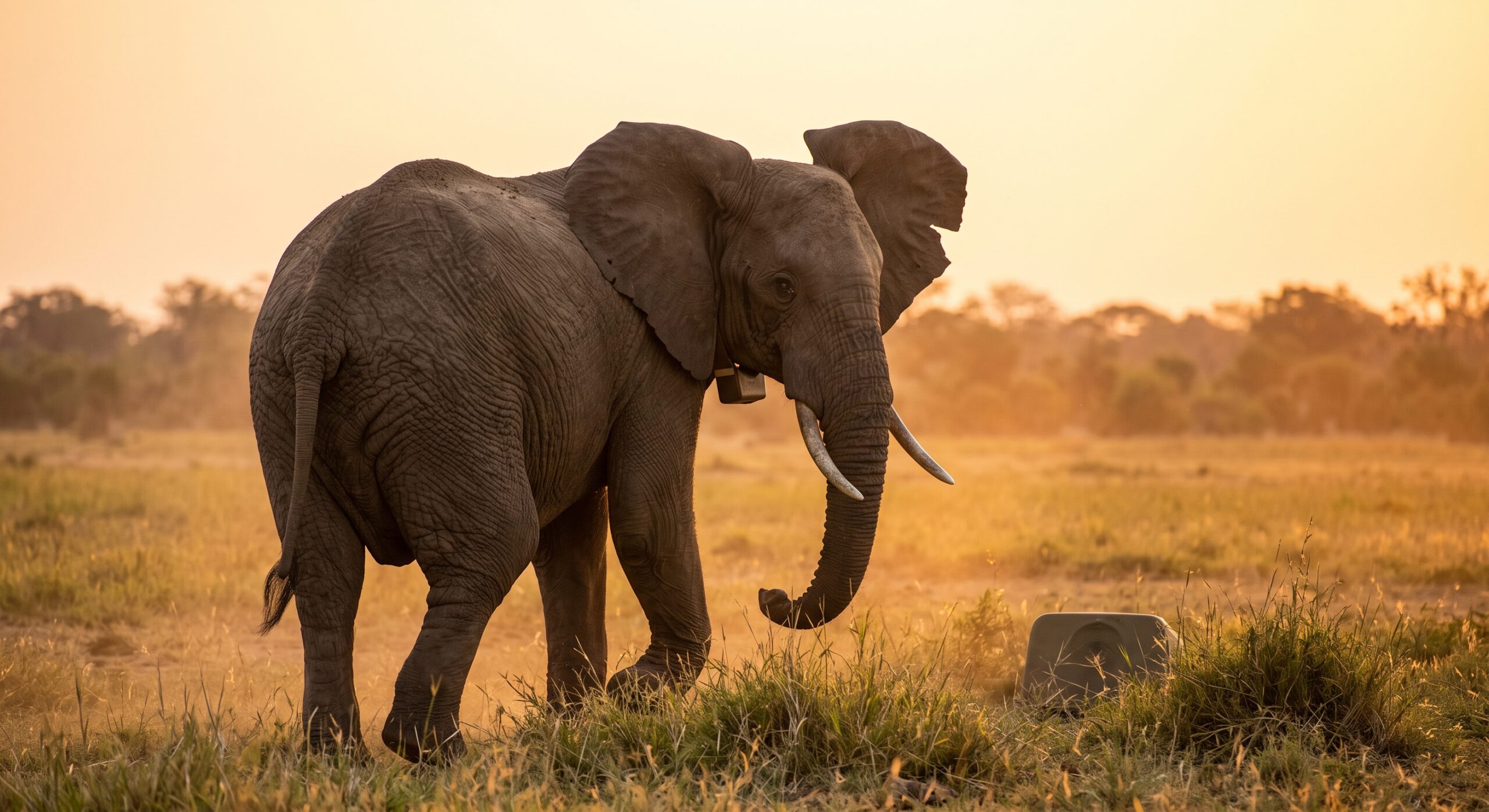
Somewhere in Kenya, researchers played a recording to a wild elephant. The voice belonged to another elephant, but that wasn’t the important part. What mattered was who the original call had been meant for.
When elephants heard calls that had once been directed at them, they reacted differently than when they heard similar calls meant for somebody else. They answered more quickly and moved toward the speaker.
It looked a lot like what happens when someone calls your name.
Researchers already suspected elephant rumbles contained patterns humans were missing, so they used machine learning to search through hundreds of recordings. What they found was remarkable: African elephants appear to use name-like calls for specific individuals.
And while scientists were listening to elephants on land, another group was listening to sperm whales beneath the ocean. There too, machines found structure hidden inside sounds humans had been hearing for years.
Only this time, it looked less like a name and more like an alphabet.
Elephants May Call Each Other by Name
Elephants live complicated social lives. Families can spread out, separate for long periods and later reunite. Mothers, daughters, sisters and calves may stay connected for decades, so being able to call one specific individual would be useful.
Researchers studying African savannah elephants in Kenya analyzed hundreds of low rumbles exchanged between animals. A machine-learning system picked up clues about which elephant a particular call was aimed at.
The strangest part was that the elephants did not seem to be simply copying each other’s voices. The sound appeared to work more like a label, which makes it surprisingly close to a human name.
There is nothing naturally “Sarah” about the sound Sarah. People simply learn that the sound refers to one particular person. Elephants may be doing something similar.
The playback experiments made the finding even more convincing. When researchers played an elephant a call that had originally been meant for her, she was more likely to respond than when she heard a call meant for someone else.
That changes how you imagine an elephant rumble. Instead of hearing a generic animal sound drifting across the grass, imagine a mother calling through the distance and another elephant hearing something close to her own name.
The machine did not teach them how to do that. It helped us notice they already were.
Then Scientists Found an Alphabet in Whale Clicks
Sperm whales live in a world dominated by sound. They communicate with patterns of clicks called codas, trading them back and forth while travelling, hunting and staying connected with their families.
Scientists have studied those clicks for years, but much of the detail was difficult to make sense of. Researchers with Project CETI used computational tools to analyze thousands of whale calls from the Caribbean, and once they looked closely enough, the clicks stopped looking simple.
They had rhythm and tempo. Whales sometimes stretched or shortened the timing of a call, and sometimes added an extra click. Those pieces could then be mixed in different combinations.
The researchers called the system a sperm whale phonetic alphabet.
That does not mean we can translate whale conversations into English. Nobody can yet listen to a whale and say, “That one just asked where the squid are.”
What scientists found was something that has to come first: structure.
Imagine hearing a foreign language for the first time. At first it may sound like one long stream of noise. Before you can translate anything, you have to work out where the pieces are and which changes matter.
That is roughly where we are with sperm whales, and AI is helping researchers find the pieces.
The Whales Were Having Conversations
This is where the story gets more interesting than simply finding different kinds of clicks.
Sperm whales do not make sounds alone. They answer one another. One whale produces a pattern, another responds, the timing changes, extra clicks appear, and the pattern shifts depending on what came before.
That begins to look less like a collection of animal noises and more like a conversation.
Researchers still do not know what most of it means, but now they can start asking better questions. Does a mother communicate differently with her calf? Does the meaning change depending on who is listening? Does adding one click change the message? Does the same call mean something different depending on what another whale just said?
For years, those questions were hard to even ask because so much of the structure was invisible to us.
Now it isn’t.
Then the Monkeys Started Doing It Too
In 2024, researchers studying common marmosets found something that made the elephant discovery even harder to dismiss as a weird one-off.
Marmosets are tiny South American monkeys that constantly call back and forth with members of their group. Scientists recorded those calls and used machine learning to study them.
Once again, they found signs that animals were using different calls for different individuals. The monkeys appeared to use vocal labels for one another.
Even more surprisingly, members of the same family tended to use similar labels for the same monkey. That means the sound may not have belonged to just one caller. The group seemed to share it.
In other words, a family of monkeys may have something surprisingly close to names.
That does not make marmosets tiny furry humans, but it does make “only humans name each other” a much harder claim to defend.
The Wall Keeps Moving
Humans have spent a long time defining ourselves by the things we thought animals could not do.
We use tools, but animals use tools too. We have culture, but traditions spread through chimpanzee groups and whale families. We remember, cooperate and form complicated relationships, and many animals do those things as well.
Language has always felt like one of the biggest remaining differences.
It still is, but the line is getting blurrier.
Elephants appear to use name-like calls. Marmosets may use shared labels for individuals. Sperm whales build conversations from combinations of rhythm, timing and extra clicks that are much richer than scientists once realized.
Machine learning is helping us see patterns that were there all along.
AI Is Teaching Us How to Listen
The most interesting part of all this is not that AI is teaching animals to communicate. The animals never needed our help.
They were already doing it.
The problem was us.
An elephant rumbled, and we heard a rumble. A whale clicked, and we heard clicks. A monkey called through the trees, and we heard another animal making noise.
But another elephant may have heard a particular individual being called. Another whale may have heard a tiny change that completely changed the message. Another marmoset may have known exactly who was being addressed.
The meaning was not necessarily missing. We just could not see the pattern.
AI is beginning to change that. We are still nowhere near a real translator for animal language, and some forms of communication may never fit neatly into human words. But researchers can now search through enormous amounts of animal sound and find tiny patterns no person could realistically track alone.
For thousands of years, humans have wondered what animals would say if only they could talk.
Maybe they were talking the whole time. Based on other research it looks like being able to communicate with animals will be a reality one day sooner than later.
Just imagine what your pets will tell you.