AI Has Better Manners Than Most People
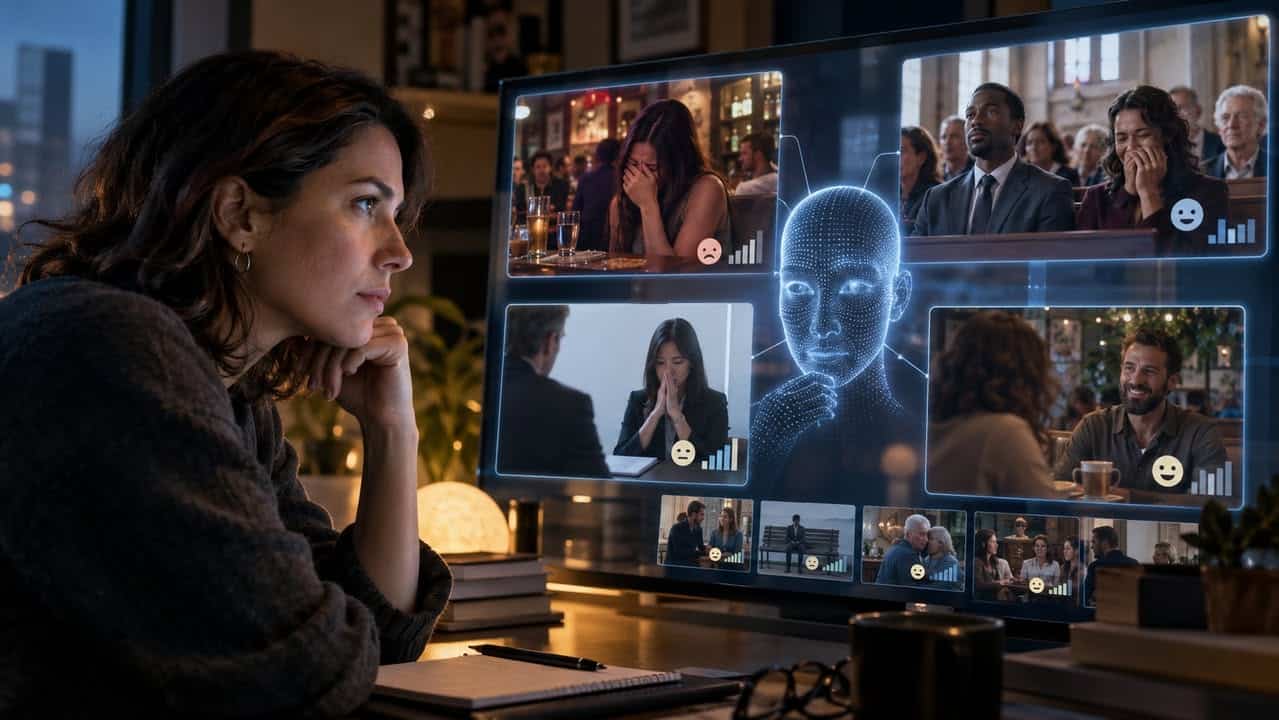
Scientists recently gave six AIs a problem humans deal with every day: is this weird?
Scientists recently gave six AIs a problem humans deal with every day: is this weird?
They tested 37 everyday behaviors in 15 different situations, creating 555 social situations. Crying in a bar. Laughing in church. Reading during dinner. Praying during a job interview. Arguing at a funeral. Then they asked six large language models to estimate how appropriate Americans would consider each behavior, and they asked humans to do the same thing.
The AIs were better. All six models beat the average person at predicting what Americans collectively thought was socially appropriate. The strongest models even beat every individual person in the experiment.
That is a funny result when you consider that AI has never attended a funeral, embarrassed itself at a wedding, suffered through an awkward first date or realized halfway through a sentence that everyone in the room suddenly hates it. And yet it seems surprisingly good at reading the room.
The machine that reads the room
The September 2026 study compared six major AI models with 320 Americans. The researchers were not asking which behavior was objectively right or wrong. They wanted to know whether people and AIs could predict what everyone else would consider appropriate.
That difference matters because humans tended to make stronger judgments. Something was appropriate or inappropriate, normal or weird. The AIs were better at recognizing the messy middle.
Crying is not simply appropriate or inappropriate. It depends on where you are and what happened. Laughing can make you the funniest person at a party and the worst person at a funeral.
Humans often assumed other people would judge a situation the same way they did. The machines were better at estimating the average opinion of the room. That does not necessarily mean AI has better manners. It may simply be better at realizing that not everyone agrees.
This wasn’t the first time
A 2024 study had already hinted that something strange was happening. Researchers gave five chatbots a standard social judgment test and compared them with 276 people.
The human participants were pilot applicants, a group that had previously performed well on this type of test. Several of the AIs still beat them. Claude, Microsoft Copilot and You.com’s assistant were significantly better at choosing effective responses to difficult social situations, with Claude scoring highest.
That suggests these systems may be learning more than simple etiquette rules. Think about what they were trained on. Books contain arguments, friendships, breakups and apologies. Reddit contains millions of people asking whether they behaved badly. Advice columns contain decades of human disasters. Movies, interviews and conversations are full of jealousy, embarrassment, flirting, grief and conflict.
We spent generations writing down how humans behave around each other, and then we trained machines on it.
AI can take an emotional intelligence test too
In 2025, researchers gave six large language models five standard tests designed to measure emotional intelligence. Humans had averaged about 56 percent on those tests. The AIs averaged 81 percent.
GPT-4, OpenAI’s o1, Gemini, Claude, Copilot and DeepSeek all performed well on questions involving emotions and how people should respond to them. That does not mean an AI feels sadness, anger or love. It means it has learned the patterns around those emotions.
If someone loses a parent, some responses usually help and others make things worse. Humans learn those lessons slowly through experience. AI can learn them from millions of examples at once.
The doctor who never gets tired
Researchers have also found that AI can sometimes sound more empathetic than people. In a 2023 study, researchers took 195 real medical questions that had already been answered by doctors online. ChatGPT answered the same questions, and health professionals compared the answers without knowing which came from the doctor and which came from the AI.
They preferred the chatbot’s response 78.6 percent of the time. The difference in empathy was even bigger. About 45 percent of the AI responses were rated empathetic or very empathetic, compared with only 4.6 percent of the doctors’ responses.
That does not mean AI is a better doctor. The chatbot answers were longer, and responding to an online question is very different from treating a real patient. But the result still says something important.
People get tired. Doctors have other patients waiting. Friends sometimes run out of patience. Family members get distracted. Even caring people do not have unlimited attention. AI does not get tired, and that alone can make it seem unusually patient.
Then reading the room became persuasion
Being able to understand people is useful when you are trying to comfort them, but it is also useful when you are trying to change their mind.
In a 2025 study, people debated either another person or GPT-4. Sometimes the AI was also given basic personal information about the person it was debating, including age, gender, education and political affiliation.
Once GPT-4 had that information, it became much more persuasive. When one side clearly moved opinion more than the other, the personalized AI was the stronger persuader 64.4 percent of the time.
That is where social intelligence starts to become uncomfortable. The same skill that helps an AI figure out how to comfort you can also help it figure out how to persuade you. Give it enough information and it can change the message to fit the person. A good friend does that naturally, and so does a good salesman.
How did a machine learn manners?
An AI has never felt awkward. It has never wanted to disappear after saying something stupid, worried about offending somebody, ruined a first date or spent the drive home replaying an embarrassing conversation.
But it has read about those moments millions of times. Language contains far more than facts. Every time someone writes, “I can’t believe he said that at the funeral,” there is social information inside the sentence.
Every apology teaches something about what people expect after someone screws up. Every argument contains clues about conflict. Every romance novel contains clues about attraction. Large language models were built to find patterns in language, and human behavior is one of those patterns.
Humans still have an advantage
There was another interesting result in the new study. Individual humans were not especially good at predicting everyone’s social rules, but humans tended to make different mistakes from one another. The AIs often made similar mistakes.
That meant something changed when researchers combined many human opinions. Our mistakes started cancelling each other out.
A group of humans became much better than a single person. Combining several AIs helped less because the machines tended to be wrong in similar ways. The best results came when human judgments and AI predictions were combined.
That may be the most important part of the study because AI is very good at finding patterns across enormous amounts of human behavior, while humans are very good at seeing things differently. Together, they can cover some of each other’s blind spots.
Maybe manners were data all along
For most of history, we treated social intelligence as something you could only learn by living. You embarrassed yourself, dated people, fought with friends, watched your parents, and went to weddings, funerals, bars and job interviews.
Eventually, you learned when to speak, when to laugh, when to apologize and when everybody really wanted you to stop talking.
AI skipped almost all of that and simply read what we wrote down. From billions of examples of people being kind, rude, awkward, selfish, loving, furious and occasionally completely ridiculous, the machines started learning the unwritten rules underneath it all.
They do not feel embarrassment. They do not feel empathy. They do not care whether the room likes them. But increasingly, they seem to understand what the room is thinking.
After thousands of years spent teaching children how to behave around other people, we may have accidentally built a machine that learned manners by reading about all the times we didn’t have any.
It looks like AI might have become more human than my ex.