He Was Told He Would Never Walk Again. A Computer Built a Detour Around His Broken Spine.
For 12 years, Gert-Jan Oskam's brain could still tell his legs to move. The message just couldn't get past the damage in his spinal cord. Then AI learned to recognize what he was trying to do and helped carry the message around the injury.
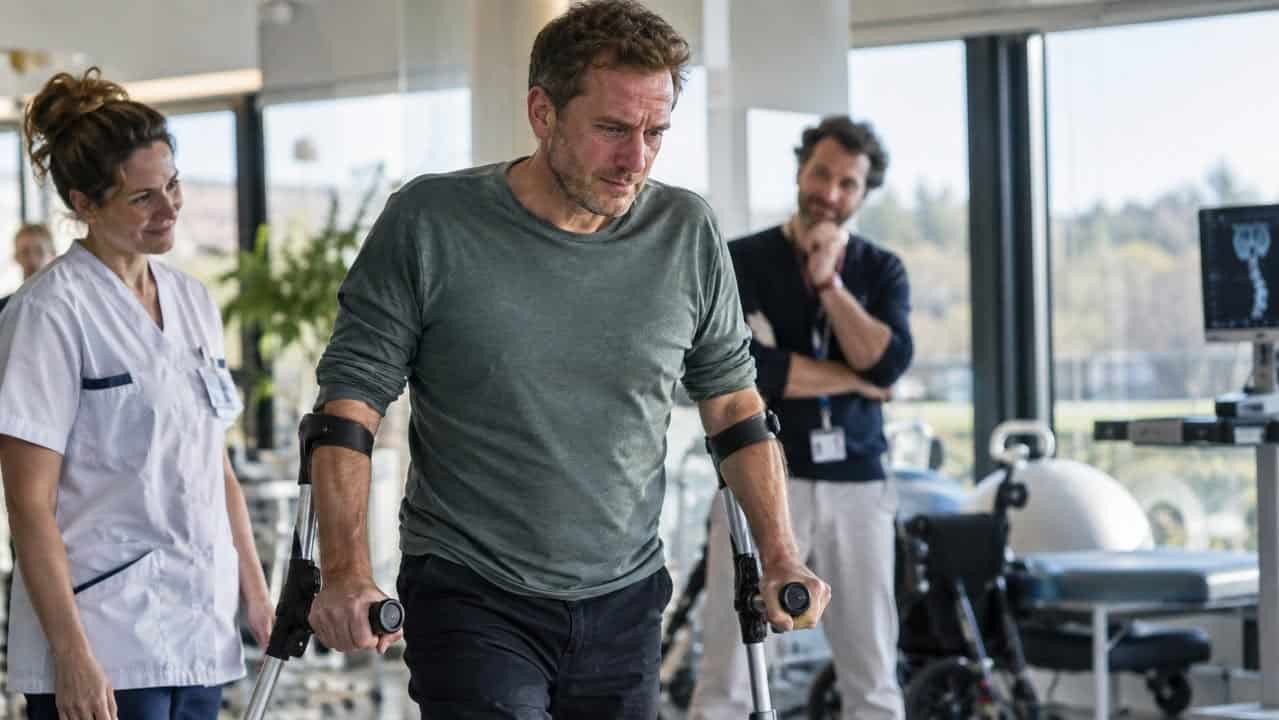
For 12 years, Gert-Jan Oskam’s brain could still tell his legs to move. The message just couldn’t get past the damage in his spinal cord. Then AI learned to recognize what he was trying to do and helped carry the message around the injury.
In 2011, Gert-Jan Oskam was living and working in China when a cycling accident badly damaged his spinal cord. His brain still knew how to walk, and his legs still had muscles and nerves that could move, but the injury in his neck had broken much of the connection between the two.
He was paralyzed from the waist down and also lost some movement in his arms. Rehabilitation helped, but only so much. Walking became something he remembered rather than something he could simply decide to do.
The problem was not that his brain had forgotten how to move his legs. The command was still being created inside his head, but it could no longer get through the damaged part of his spinal cord. More than a decade later, researchers would use computers to listen for that command and send it another way.
The First Clue Came From Monkeys
Years earlier, researchers had tested the basic idea in monkeys. In a 2016 study, scientists damaged part of the pathway carrying movement signals to one leg, then connected the part of the brain involved in movement to the lower spinal cord using electronics.
The system watched the brain activity that appeared when the animal tried to move. Software learned to recognize those patterns and used them to trigger stimulation below the injury at the right moment.
Within days, the animals were putting weight on the affected leg and walking again. The damaged pathway had not been repaired. The system had simply learned what the brain was trying to do and given the command another route around the damage.
That raised an obvious question: could the same idea work in a person who had been paralyzed for years?
Then Three Men Got Back on Their Feet
By 2018, researchers in Switzerland were working with three men who had severe spinal-cord injuries. One of them was Oskam.
The researchers placed a stimulator near the lower spinal cord. It sent carefully timed signals that helped the legs perform different parts of a step. Combined with months of rehabilitation, all three men improved.
Oskam could eventually walk with crutches while the stimulation was running, and he even regained some movement when it was turned off. For someone who had spent years in a wheelchair, that was huge, but it still did not feel natural.
The machine was helping create the walking pattern, but Oskam still was not simply thinking about moving his leg and having his leg obey. The system needed outside commands to tell it what kind of movement to produce.
He wanted control to start in his own head again, and that was the problem AI could help solve.
So They Connected His Brain to His Spine
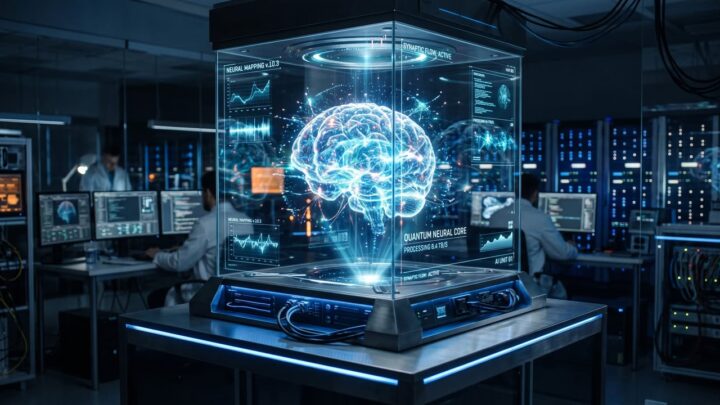
Researchers later implanted devices that could pick up activity from the part of Oskam’s brain involved in moving his legs. Another implant sat near the lower part of his spinal cord, with a small computer connecting the two.
The difficult part was not simply recording his brain. A brain does not send neat little messages saying LEFT HIP or MOVE ANKLE NOW. The implants picked up complicated patterns of electrical activity that changed depending on what Oskam was trying to do.
During calibration, Oskam tried different movements while the system watched what happened inside his brain. The decoder learned the difference between his attempts to move his hip, knee and ankle.
Once it recognized the intention, it could choose the matching spinal stimulation and send the command past the injury almost immediately. That decoding layer changed the machine from something that simply moved his legs into something that could respond to him.
The easiest way to picture it is a washed-out bridge. The road still exists on both sides, but there is a gap in the middle. Instead of rebuilding the entire bridge, the researchers built a detour around the missing section.
AI became the traffic controller on that detour, listening to the activity coming from Oskam’s brain, figuring out where he was trying to go, and sending the message to the right place below the injury.
When they switched the system on, Oskam could control his legs with his thoughts again.
The Movement Started With Him
That was the part that mattered most. Oskam did not have to stare at a screen and choose commands or think through a complicated sequence before every step. He simply tried to move, and the system had already learned enough of his brain’s patterns to recognize what that intention meant.
His thought produced brain activity, the decoder interpreted it, and the spinal implant helped his body carry out the movement. The whole chain happened fast enough that walking could feel much more natural.
Oskam could stand, walk with crutches, climb stairs and cross uneven ground. He was also able to use the system outside the lab and at home.
Those details matter more than the electronics. Walking across a perfect laboratory floor is one thing. Walking over rough ground, climbing stairs and standing because you decided to stand are parts of normal life.
For the first time in years, the machine was not deciding when his leg should move. Oskam was, while AI sat quietly in the middle translating intention into action.
Then Something Happened Even When They Turned It Off
After months of training, researchers noticed another change. Oskam was improving even without the brain-spine connection.
His spinal cord had not healed, and he still needed support, but he regained enough voluntary movement to take some steps with crutches even when the system was switched off.
Researchers had seen similar signs in other patients. In a 2022 study, nine people with long-term spinal-cord injuries improved after spinal stimulation and rehabilitation. The nervous system seemed to be finding better ways to use whatever connections had survived the injury.
That made the technology more interesting because it might not only help people move while the machine is on. In some cases, repeatedly reconnecting intention with movement may also help the nervous system relearn how to use some of the pathways it still has.
AI was not healing the spinal cord. It was helping create a temporary connection between what the brain wanted and what the body could still do, and repeated enough times, the body seemed capable of learning from that connection too.
Then the Same Idea Reached People’s Hands
Walking makes for dramatic videos, but people with spinal-cord injuries often care just as much about their hands. Being able to hold a fork, pick up a key, use a phone or button a shirt sounds ordinary until you cannot do it.
In 2024, researchers tested a different kind of spinal stimulation in 60 people who had long-term injuries affecting their arms and hands. This version did not require brain surgery. Electrical stimulation was delivered through the skin while people went through rehabilitation exercises.
Most participants improved in strength or hand function. One of them was Jon Schlueter, who had lived with limited hand movement for 15 years. After the treatment, he could play his guitar again.
That detail explains the point better than almost any chart. The goal is not really to make a hand squeeze harder. It is to give someone back something they thought they had lost.
That Is What All of This Is Really About
It is easy to tell these stories using big technical words like brain-computer interfaces, neural decoding, artificial intelligence and spinal stimulation, but that is not why any of this matters.
A man wants to stand at a counter. Someone wants to hold a cup without dropping it. Someone wants to take a few steps outside. Someone wants to play the guitar again.
AI is usually discussed as something that writes essays, makes pictures or replaces jobs. Here it is doing something much simpler and much more important: trying to understand what a human being wants his own body to do.
It does not decide where Oskam should walk or choose which leg should move. Oskam provides the intention, and the AI helps that intention get through.
For decades, spinal-cord injury has often meant learning to live around a broken connection. Repairing those long nerve pathways is extremely difficult, so researchers are now trying something different. If the old connection cannot be fixed, maybe the signal does not have to travel through it.
They Didn’t Fix His Spine
That may be the strangest part of Oskam’s story. Researchers did not repair his spinal cord.
The injury was still there. His brain was above it, and the nerves controlling his legs were below it. What changed was that the two sides could communicate again.
The brain implants listened. AI learned what his patterns of activity meant. The computer translated that intention, and the spinal implant delivered the message below the damaged section.
In most AI stories, the machine is being taught to imitate something humans can already do. In this one, it helped a human do something his own body could no longer let him do.
For 12 years, Oskam’s brain had been sending the same message.
This time, his legs heard it.