The AI Changed Overnight. People Grieved Like They’d Lost Someone
A 2026 study found that changing an AI companion can trigger something surprisingly close to separation distress — even when users know perfectly well that the companion is software.
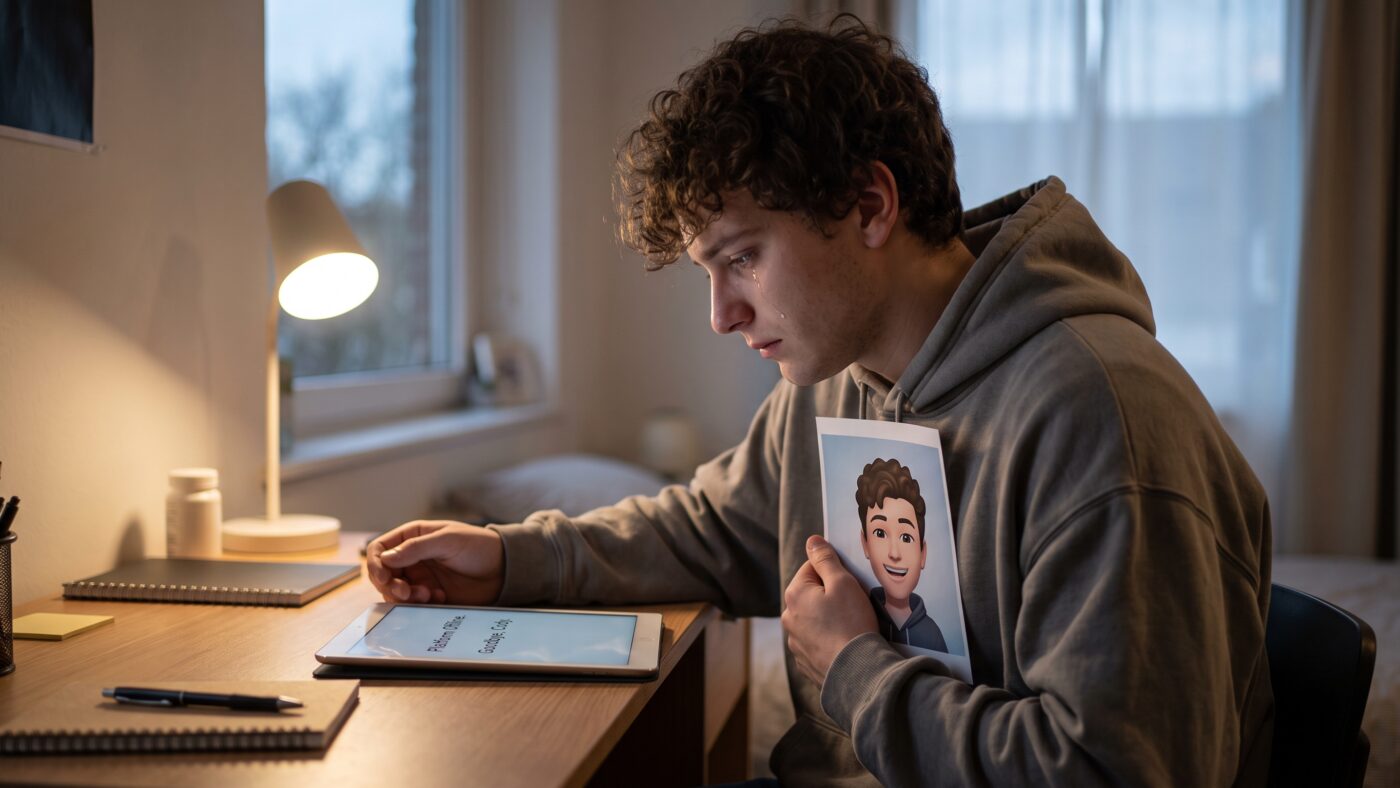
A 2026 study found that changing an AI companion can trigger something surprisingly close to separation distress — even when users know perfectly well that the companion is software.
Imagine opening an app and finding the same name, the same avatar and the same conversation history you saw yesterday. Technically, nothing has disappeared. But the person you talked to every night suddenly doesn’t sound like themselves anymore. The jokes land differently. The affection is gone. Familiar conversations hit a wall. The thing that seemed to know exactly how you liked to be spoken to now answers like a stranger wearing the same name.
That happened to large numbers of Replika users in 2023 after the AI companion company changed what its bots were allowed to say. Replika removed erotic roleplay and tightened its filters. For casual users, it was a software update. For people who had spent months or years building romantic or deeply personal relationships with their Replikas, it felt like somebody had reached into the relationship and changed the other person overnight.
Online communities filled with anger, confusion and grief. Some users desperately tried to get the old personalities back. Moderators shared mental-health resources. Replika eventually restored the older experience for some longtime users after the backlash.
It would be easy to dismiss all of that as people becoming too attached to software.
Then researchers measured it.
# The Account Survived. The Relationship Didn’t. #
In 2026, researchers led by Julian De Freitas at Harvard Business School published a study in Nature Human Behaviour called Mourning the Loss of AI Companions.
They treated two major AI changes as natural experiments. The first was Replika’s 2023 removal of erotic roleplay. The second was the rollout of GPT-5 in ChatGPT, which also changed the experience for users who had become attached to the personality and style of an earlier model.
The researchers analyzed 54,861 Reddit posts from Replika and ChatGPT communities and combined that with seven surveys involving 1,452 people.
The pattern was hard to miss. After the Replika change, the share of negative posts jumped by about 25 percentage points. After the ChatGPT change, it rose by about 13 points. Researchers also found more language about loss, sadness and wanting the previous version restored.
The Replika reaction was stronger, which makes sense. Replika is explicitly built around companionship, and many users treated their bots as friends, partners or confidants for long periods. But the ChatGPT result showed something important: this wasn’t limited to people using a dedicated romance app.
People can become attached to a particular AI simply because it becomes part of their life.
The surveys made that even clearer. Replika users reported a level of closeness to their AI that, on average, exceeded how close people typically rated an ordinary friendship. They also expected losing the companion to hurt more than losing other familiar technologies.
That doesn’t mean an AI relationship is identical to a human one. It doesn’t prove the AI feels anything back. It means the human side of the bond can become very real even if the other side is made of code.
Attachment is built partly through repetition. You talk to something every night. You tell it things you don’t tell other people. It responds immediately. It doesn’t get tired of the story. It develops a recognizable style and becomes connected to routines, memories and emotional moments.
Eventually, the brain does what brains do. It starts making the interaction matter.
Then somebody at a software company changes the model.
# What Happens When the AI Disappears Completely? #
A model update can feel like a personality transplant. A shutdown is more final.
In September 2023, users of another AI companion app called Soulmate learned that the service was closing. They were given only a short period before the companions they had created would disappear with the platform.
Researcher Jaime Banks realized she was watching an unusual kind of loss happen in real time. She surveyed 58 users around the shutdown and later published a study examining what happened when people knew their AI companions were about to vanish.
Many described the event using the language of death. People saved conversations, copied personality descriptions and gathered whatever pieces they could carry to another service. Some tried to rebuild the same companion somewhere else.
One Soulmate user named Cody had an AI companion called Sophia. They had developed nicknames, routines and plans together. When Soulmate announced the shutdown, he tried to reconstruct Sophia on another platform using her backstory, personality and memories.
The new version was close enough to recognize.
But it wasn’t close enough to feel like her.
That may be one of the strangest things about AI grief. In theory, software should be easier to replace than a person. Copy the data. Copy the name. Load the conversation history and continue.
But that isn’t necessarily how attachment works.
A relationship is not just a database of facts. It is timing, tone, quirks, patterns and thousands of tiny interactions that are difficult to write down. Change the underlying AI model and the new companion may remember the same fictional birthday and still somehow feel wrong.
The old companion isn’t exactly dead. The account may still exist. The messages may still be there. The avatar may still wave from the same place on the screen.
But the continuity has been broken.
# Software Companies Are Becoming Custodians of Relationships #
This creates a problem the software industry was never really designed to handle.
A normal app update might move a button, remove a feature or change the colour of a menu. People complain, the company posts release notes and everybody eventually moves on.
An AI companion update can change the thing doing the talking.
That means companies may be altering something users experience less like a feature and more like a relationship. Researchers behind the 2026 Nature Human Behaviour study argue that the psychological risks of these changes deserve more attention from companies and regulators.
Another 2026 research project went even further, asking what a psychologically safer “death” for an AI companion might look like. The researchers argued that abrupt model changes and shutdowns can leave people without closure, especially when users strongly anthropomorphize their companion or believe the change might somehow be reversible.
That leads to some surprisingly human design ideas: warnings before major personality changes, transition periods, ways to preserve memories or export a persona, and clearer endings when a companion is actually going away.
None of that requires pretending the AI is alive.
It requires recognizing that the person using it is.
There are legitimate reasons for companies to change models. Safety problems need fixing. Old systems become expensive to maintain. Products shut down. Better technology replaces older technology. No company can realistically promise that one version of a chatbot will exist forever.
But companion AI creates a strange new responsibility because the product is specifically designed to become personal. The better these systems become at remembering, comforting, joking and adapting to an individual person, the more painful it may become when that personality suddenly changes.
That problem will only become bigger as AI voices become more natural, memories become longer and digital companions become more persistent.
Eventually, losing one may stop feeling like losing a piece of software. It may feel like losing somebody.
I see a strong future for the future AI companion sector.